Mayor marks historic environmental protection progress at recreational vleis
08 September 2025
Cape Town Mayor Geordin Hill-Lewis marked historic progress in the environmental protection of the City’s recreational vleis, with the dredging at Zeekoevlei well under way, and delivery of a second weed harvester for Zandvlei, the third specialised vehicle of its kind delivered this term. The Mayor visited both Zeekoevlei and Zandvlei earlier today, together with Alderman Eddie Andrews, Deputy Mayor and Mayoral Committee Member for Spatial Planning and Environment.
‘We pledged to restore the City’s waterways and it is a joy to witness critical milestones at two of our recreational vleis today. Dredging commenced at Zeekoevlei on 30 June 2025, the City’s first vlei dredging in 42 years. We are using innovative floating machinery so we can go far beyond the water’s edge to remove sediment from the lakebed containing nutrient and pollutant build-up. I am excited to see the impact of this extensive environmental restoration over the next 26 months.
‘I was also pleased to visit Zandvlei today to see the second weed harvester delivered for this vlei, named Spoonbill. The arrival of Spoonbill is doubling our specialised vessel capacity at Zandvlei to assist with aquatic vegetation management in both the canals and the main waterbody. Besides these two vessels, we also have a new weed harvester operating at Rietvlei. These vessels will not only improve the environmental health of these wetlands, but also clear waterways to make the vleis more navigable and safer for communities,’ said Mayor Hill-Lewis.
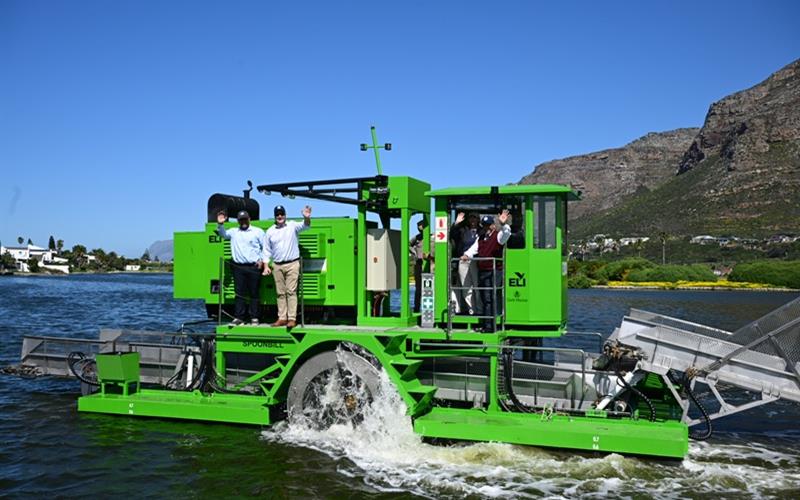
Named through a public nomination process, the Spoonbill is the third vessel of this design. It incorporates a number of significant modifications that improve performance, particularly when navigating the tight waterways of Marina da Gama. The vessel is expected to begin operations on Zandvlei in the coming months, coinciding with the start of the aquatic cutting season.
The weedharvesters are key ecological management tools. By removing pondweed and algae, they extract excess nutrients from the system, thereby improving water quality and reducing the risk of algal blooms and oxygen depletion associated with eutrophication.
• Furthermore, two sections of Zeekoevlei will be dredged over a period of 26 months and work has already started at Storm Bay.
‘We undertook significant preparations for the dredging, including the construction of a 4,3km long slurry pipeline to pump the dredged sediment from Zeekoevlei to the dewatering ponds; preparing the dewatering ponds at the Cape Flats WWTWs; and the assembling and testing of the floating suction dredger
‘The dredging happens daily from 06:00 to 19:00. We have a team of 15 personnel on site who are involved with the operation itself – from dredge operators, to deck hands and divers to move the mooring blocks, dredger and assist with work under the water, as well as excavator operators. This is over and above the City’s reserve personnel who are also assisting,’ said the City’s Deputy Mayor, Alderman Andrews.
• To date, up to 15 200m³ of sediment have been dredged at Storm Bay
• All-in-all, the volume of sediment to be dredged at Storm Bay is 207 000m³ and anticipated to take about 12 months
‘With us now approaching drier and hotter months, we anticipate that the working conditions will improve significantly as there will be less water in the False Bay Nature Reserve and the heat will also help with the drying and shrinkage of the dredged material,’ said Alderman Andrews.
Once the dredging of the Storm Bay section of the vlei has been completed, the operation will move over to the section known as Home Bay.
Dredging information
The total volume of sediment to be dredged from Home Bay is 157 000m³ and is estimated to take about 14 months
The total volume of sediment to be dredged from Storm Bay is 207 000m³ and is estimated to take about 12 months
Hydrographic surveys of the dredged area are conducted every two weeks to measure the progress
The dredged sediment is being pumped from Zeekoevlei via a 4,3km long slurry pipeline to ponds for dewatering and storage
The slurry pipeline crosses several roads within the area, amongst which Governors Walk and Peninsula Road
The supernatant water is pumped from the dewatering ponds to the Cape Flats WWTWs via a 2,3km long pipeline
15 000m³ of rock material was used in constructing the mound bund walls at the dewatering ponds to assist with the dewatering and drying of the dredged sediment
Dewatering sumps are located around the perimeter of the dewatering ponds to assist with the drainage of supernatant water to the Cape Flats WWTWs
Zeekoevlei is located in the False Bay Nature Reserve, a Ramsar site of international importance for wetlands. The City is also accredited as a Ramsar City. Improving water quality is a key international commitment.
Both Zandvlei and Zeekoevlei are located in proclaimed nature reserves managed by the City of Cape Town’s Biodiversity Management Department who is responsible for managing Cape Town’s exceptionally rich biodiverse terrestrial and wetland ecosystems.
Caption 1: Mayor Geordin Hill-Lewis and Ald. Eddie Andrews, the City’s Deputy Mayor, visited Zandvlei earlier today where they undertook a ride on the Spoonbill, the second weed harvester that was recently delivered to assist with aquatic vegetation management in both the canals and the main waterbody.
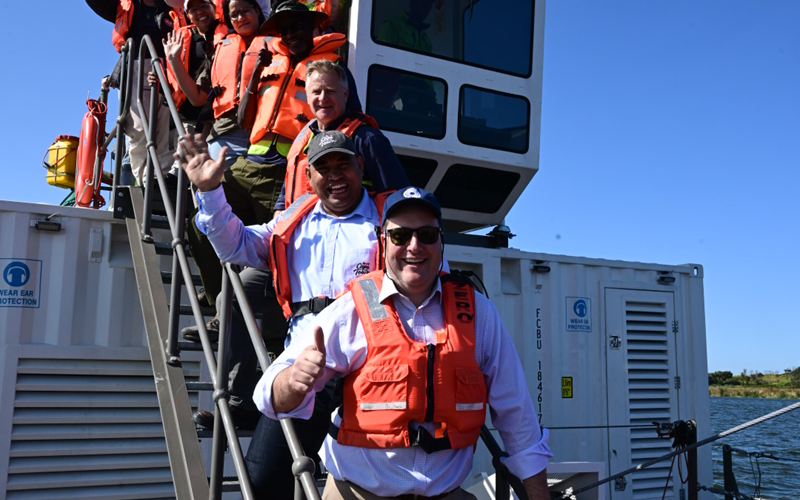
Caption 2: The dredging of the Storm Bay section of Zeekoevlei commenced on 30 June 2025, the City’s first vlei dredging in 42 years. A floating suction dredger is used to dredge organic rich sediment from the vlei bed.
End
Published by:
City of Cape Town, Media Office